Galaxies8 min
The shadow at the heart of a galaxy
Supermassive black holes sit at the centres of most large galaxies. How do astronomers study something that emits no light?
Sample article — placeholder editorial content for COSMOS Phase 1.
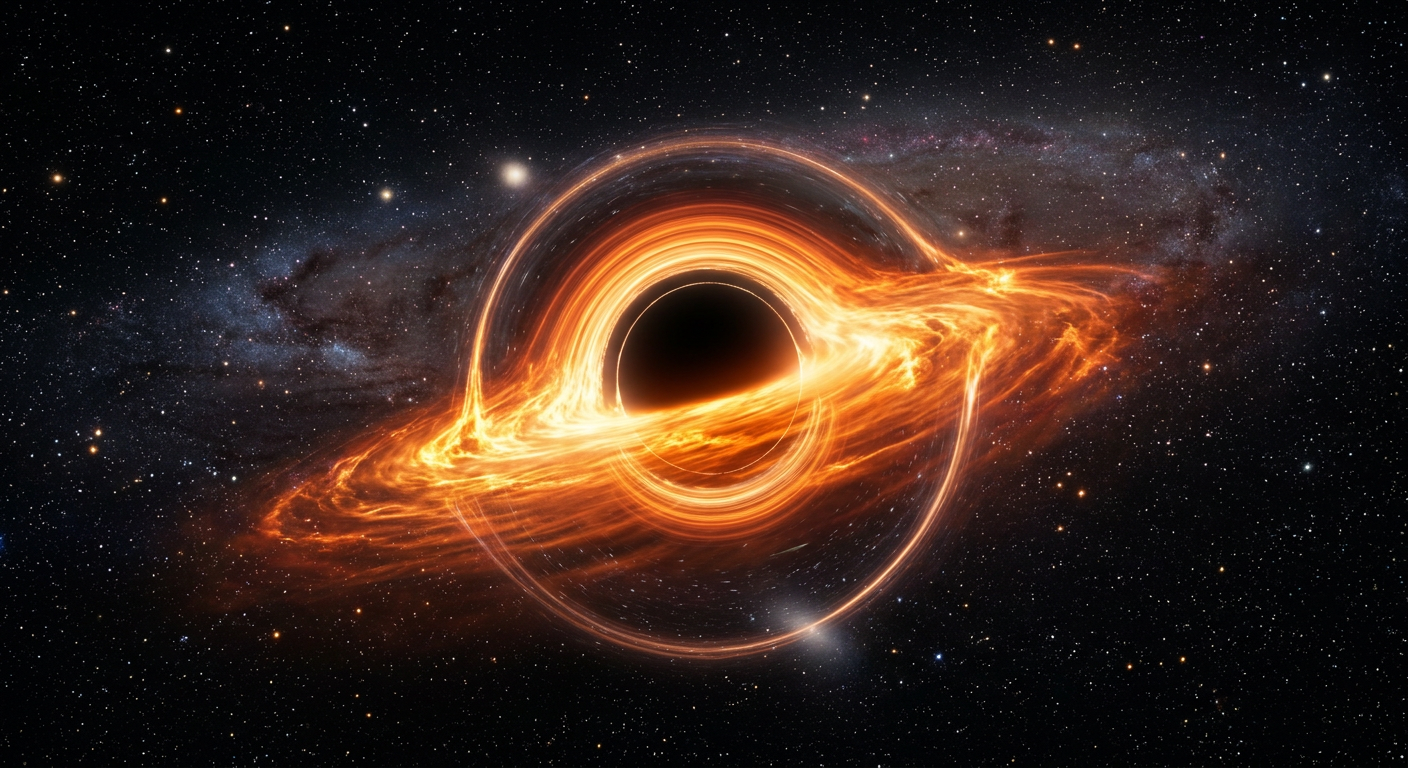
A black hole itself emits no light, but the gas spiralling around it — the accretion disk — can become extraordinarily hot and bright.
Gravity near a black hole bends light so strongly that it creates a dark “shadow” surrounded by a bright ring. Linking radio telescopes across the globe has allowed astronomers to image such shadows directly.
Our own Milky Way hosts a supermassive black hole called Sagittarius A*, about four million times the mass of the Sun.