Technology7 min
How infrared telescopes see the early universe
Light from the first galaxies has been stretched into the infrared by cosmic expansion. Here is why that matters for how we build observatories.
Sample article — placeholder editorial content for COSMOS Phase 1.
As the universe expands, light travelling across it is stretched to longer wavelengths — a phenomenon astronomers call cosmological redshift. Visible light emitted by very distant galaxies arrives at Earth shifted into the infrared.
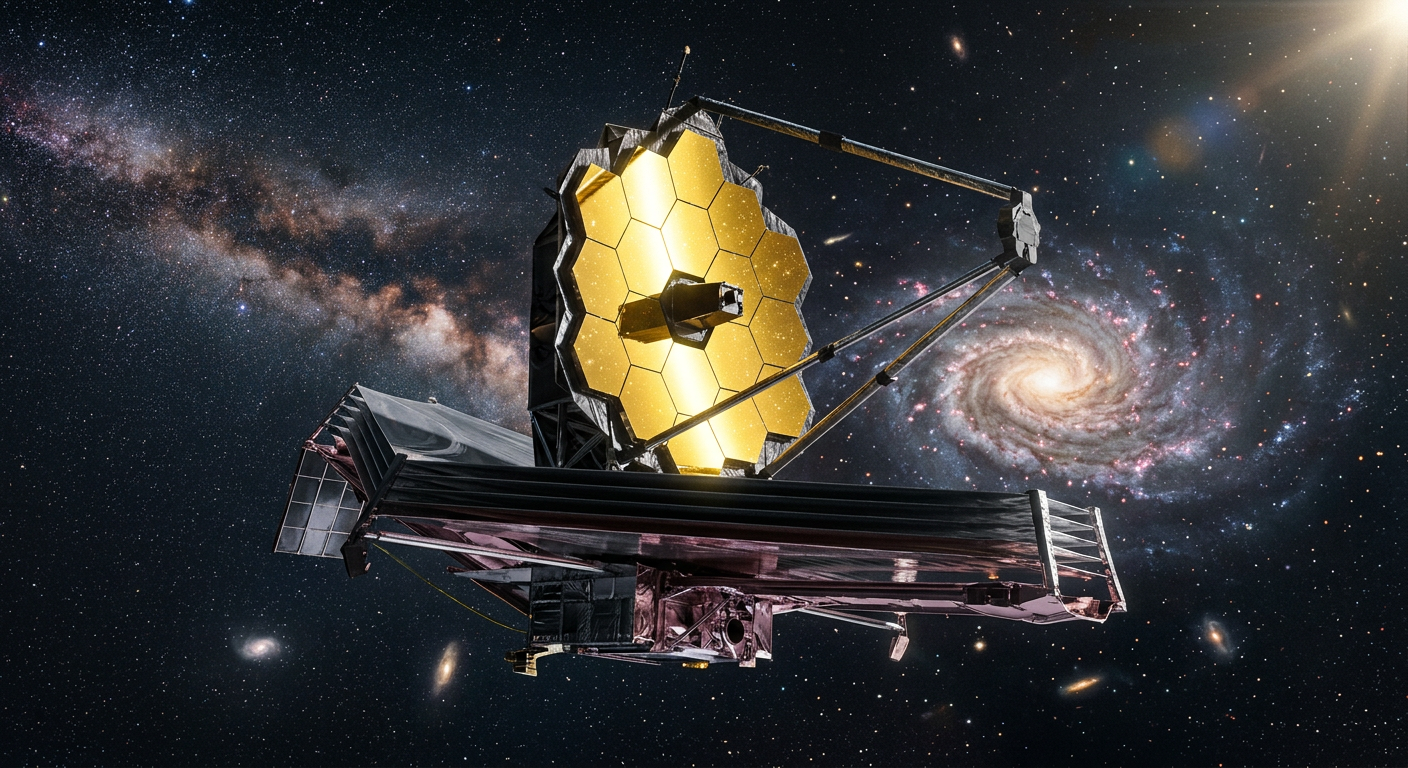
That is why modern observatories designed to study the early universe are optimised for infrared wavelengths. Large segmented mirrors collect faint light, while sunshields and cooling systems keep instruments cold enough that their own heat does not drown out the signal.
Infrared light also passes through clouds of cosmic dust more easily than visible light, revealing stars forming inside nebulae that would otherwise appear opaque.